How to Set Up a Home Study Space When You’re Retraining for a New Career
Table of Contents
Dan’s study space was the end of the dining table, which he cleared every evening at nine, after the children were in bed. By ten past, it had a laptop, a mug, a pile of printed notes, a charger tangled around a highlighter, and a school reading folder someone had abandoned there. He was thirty-eight, three weeks into an evening course, and he’d already realised that the course was the easy part. The hard part was trying to concentrate in a room that was still the middle of the house.
Plenty of adults retraining from home are in the same position. You rarely get a spare room and a dedicated desk. What you can do is make a small corner work harder than it looks.
Start With What You Can See
The first thing worth fixing is the visual noise around your work area. A well-known study by Princeton neuroscientists Stephanie McMains and Sabine Kastner, published in the Journal of Neuroscience in 2011, found that when several visual stimuli appear at once, they compete for neural representation by mutually suppressing one another’s activity in the visual cortex. In plain terms, the more things your eyes have to process, the harder it is for the brain to focus on any one of them.
That was a laboratory experiment about how the brain handles competing images, not a study of messy homes, so it’s best treated as a reason for a sensible experiment rather than a rule. But it gives a decent argument for clearing the surface in front of you before a study session. If you can see unopened post, a pile of laundry and a half-built jigsaw from your seat, it costs you something.
Find the Corner That Works
You don’t need much, and you don’t need to redecorate. A few principles help:
- Choose the spot with the fewest passing distractions, even if it isn’t the prettiest
- Face a wall or window rather than the room’s busiest area
- Keep one clear surface that is only for studying, however small
- Put a lamp where you can adjust it, so evening sessions don’t mean harsh overhead light
- Store your materials in a box or tray you can lift away when the session ends
The last one matters more than it sounds. A table that gets cleared at the end of each session stops being “the place I’m behind on things” and goes back to being a table.
Make It Easy to Start
Dan’s trouble wasn’t staying focused once he was going. It was the ten minutes of setup that ate his limited time. A few small changes cut that down:
- Keep a charger, a pen and a notebook in the same place every time
- Leave your course materials in one folder rather than scattered across rooms
- Set up the night before so the next session begins when you sit down
- Agree with your household on a short, predictable window for studying
That last point is as much about people as about furniture. A study space only works if the people sharing your home know when it’s in use. A door that closes, a pair of headphones, or a note on the table can do the job, and so can a plain conversation about what you need.
Thinking About Where the Study Is Heading
A home study corner is a good place to think about where the learning is meant to lead, not just how to survive it. If you’re still deciding on a direction, it helps to read what employers actually ask for. Browsing recovery jobs at a residential treatment programme in Wichita, Kansas, is one example: the listings set out the counsellor and nursing roles that programme hires for, and the type of team those roles sit in. The details are American and won’t map directly onto UK qualifications, but they show how clearly employers describe what they want, which can help you judge whether a course is pointing at the sort of work you imagine.
Keep a folder or a pinboard in your study corner for this. Printing a few job descriptions and noting which skills appear again and again can make a difficult module feel connected to something real.
Keeping the Space Kind to You
Retraining takes months, sometimes years, and a corner that feels punishing will stop being used. A few touches that make it more bearable:
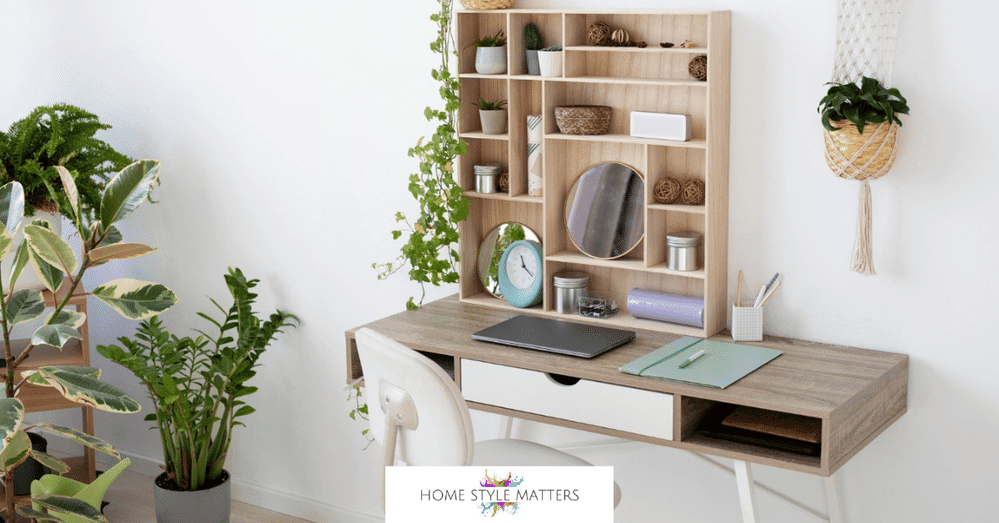
- A plant, a photo, or something that belongs to you and has nothing to do with the course
- A comfortable chair, even a cushion, since evening sessions run long
- A small clock, so you notice time passing without checking your phone
- A drink and a snack within reach, so you aren’t wandering to the kitchen
- A clear stopping point, so the evening has an end
Know When the Space Isn’t the Problem
Sometimes the corner is fine, and the difficulty is the load. Studying after a full day of work and childcare is genuinely tiring, and it’s reasonable to adjust the pace. Talk to your course tutor about extensions or part-time options, and tell your household when you’re running low. If tiredness or low mood is lasting and starting to affect your sleep or everyday life, speak to your GP.
Dan eventually moved his study session to a small side table by the window in the hall. It was narrow, and the chair wasn’t brilliant, but nobody walked through it, and nothing lived on it. Three weeks later, the highlighter had a home, the notes had a folder, and the dining table had gone back to being where the family ate.
Sources
McMains, S., & Kastner, S. (2011). Interactions of top-down and bottom-up mechanisms in human visual cortex. Journal of Neuroscience, 31(2), 587-597. https://www.jneurosci.org/content/31/2/587