
How to Dry Clothes Indoors Without Causing Damp and Mould
Table of Contents
How to dry clothes indoors without causing damp and mould is a common concern during the colder, wetter months. When hanging washing outside isn’t practical, many households rely on indoor clothes airers. However, wet laundry releases moisture into the air, which can contribute to condensation, damp and mould if your home isn’t properly ventilated. Fortunately, a few simple changes can help you dry your washing more efficiently while keeping excess moisture under control.
Why Can Drying Clothes Indoors Cause Damp and Mould?

Wet laundry contains a surprising amount of water. As the clothes dry, the moisture evaporates into the surrounding air. If the room is poorly ventilated, the humid air has nowhere to escape. When warm, moist air comes into contact with colder surfaces such as windows, external walls and mirrors, it can turn back into water droplets. This is known as condensation. Repeated condensation can create the consistently damp conditions in which mould is more likely to develop. This is particularly noticeable during autumn and winter, when windows and walls are colder and homes are naturally kept closed up to retain heat.
Avoid Drying Clothes Directly Against Walls
Give your clothes plenty of space and avoid positioning an airer directly against an external wall. Wet fabric placed close to a cold wall can prevent air from circulating properly and may increase the risk of moisture accumulating around the wall surface. Leaving a gap between your washing, walls, furniture and other surfaces allows the interior air to move more freely.
Improve Ventilation
Good ventilation is one of the most effective ways to manage moisture. Opening a window slightly while clothes are drying can allow humid air to escape. You do not necessarily need to leave the window wide open for hours, particularly during cold weather. Short periods of effective ventilation can help refresh the air without unnecessarily cooling the whole house. If your home has extractor fans, make use of them. For homes with trickle vents, make sure they are not permanently closed or blocked.
Use Your Clothes Airer More Efficiently
How you arrange your washing on an airer can also affect drying time. Avoid bunching several wet garments together. Instead, spread clothing out so that air can circulate around each item.
Try these simple tips:
- Shake clothes out before putting them on the airer.
- Leave space between garments.
- Turn thicker items during the drying process.
- Avoid placing too many clothes on one small airer.
- Position the airer where there is good airflow.
- Keep clothes away from radiators, walls and windows.
- Remove dry items promptly rather than allowing them to remain on the airer.
The quicker your washing dries, the less time moisture is being released into your home.
Choose the Right Room for Your Laundry
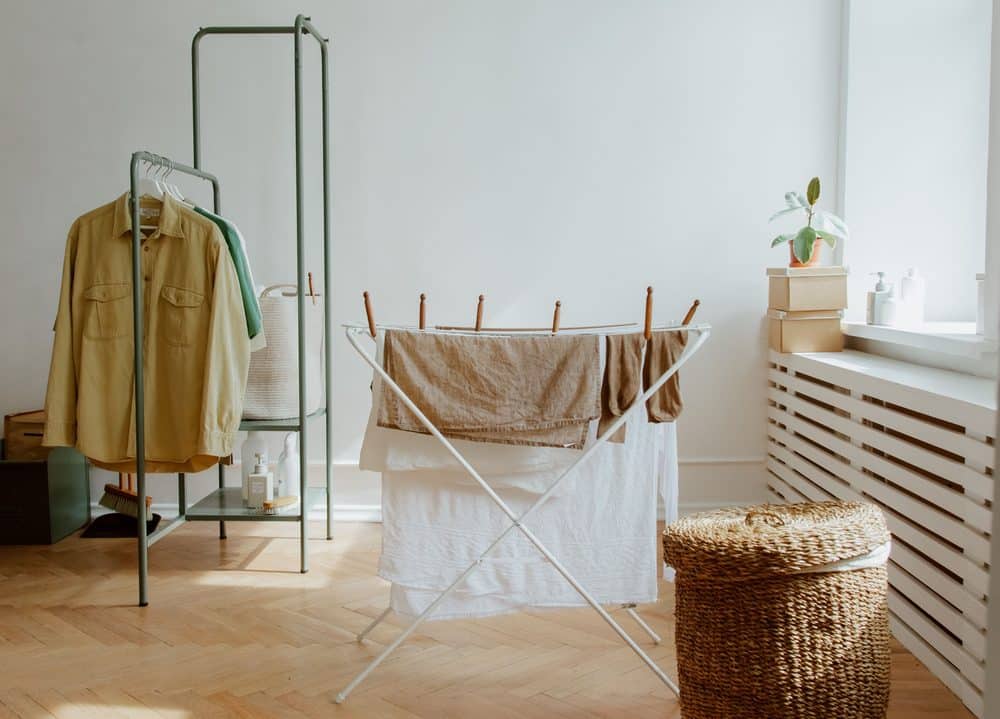
Where you place your washing can make a significant difference. If possible, avoid placing wet clothes in bedrooms or living rooms. These are spaces where you spend a lot of time, and adding substantial amounts of moisture to the air can increase humidity. A bathroom may appear to be an obvious choice because it already deals with moisture from baths and showers. However, it should only be used if it has effective ventilation. A utility room, sunny conservatory or well-ventilated spare room can be a better option, provided there is adequate airflow.
Use Your Washing Machine’s Spin Cycle
One of the easiest ways to reduce indoor drying time is to remove as much water as possible before taking clothes out of the washing machine. Where appropriate for the fabric and garment, use a higher spin speed. Always check the care label first, as delicate materials may require a gentler setting. A good spin can significantly reduce the amount of water left in clothing, meaning your washing has less moisture to release. For particularly heavy items such as towels and bedding, this can certainly make a noticeable difference.
Do Not Put Wet Clothes Straight on the Radiator
It may be tempting to drape wet clothes over a radiator, especially when you want them to dry quickly. However, covering a radiator can interfere with the way heat circulates around the room. It can also cause moisture from the clothing to evaporate rapidly into the air without providing an effective way for that humid air to escape. Instead, use a suitable clothes airer positioned safely away from the radiator. If you have central heating, allowing warm air to circulate around the room can help clothes dry more efficiently, while ventilation helps remove the resulting moisture.
Keep an Eye on Condensation
Condensation on windows is one of the most visible signs that there is excess moisture in the air. If you notice your windows becoming regularly covered in water droplets during the drying process, it is worth taking action. Wipe away excess condensation rather than allowing water to sit on window frames and sills. This is particularly important with wooden window frames. Then improve ventilation and consider whether you are drying too much washing in the room.
Other signs of excessive indoor humidity can include:
- Persistent condensation on windows.
- A musty smell.
- Damp patches.
- Mould around window frames.
- Black spots appearing on walls or ceilings.
- Peeling paint or wallpaper.
- Clothes taking an unusually long time to dry.
If you repeatedly experience damp or mould, your wet laundry may only be part of the problem. Persistent issues should be investigated to identify the underlying cause.
Consider a Dehumidifier
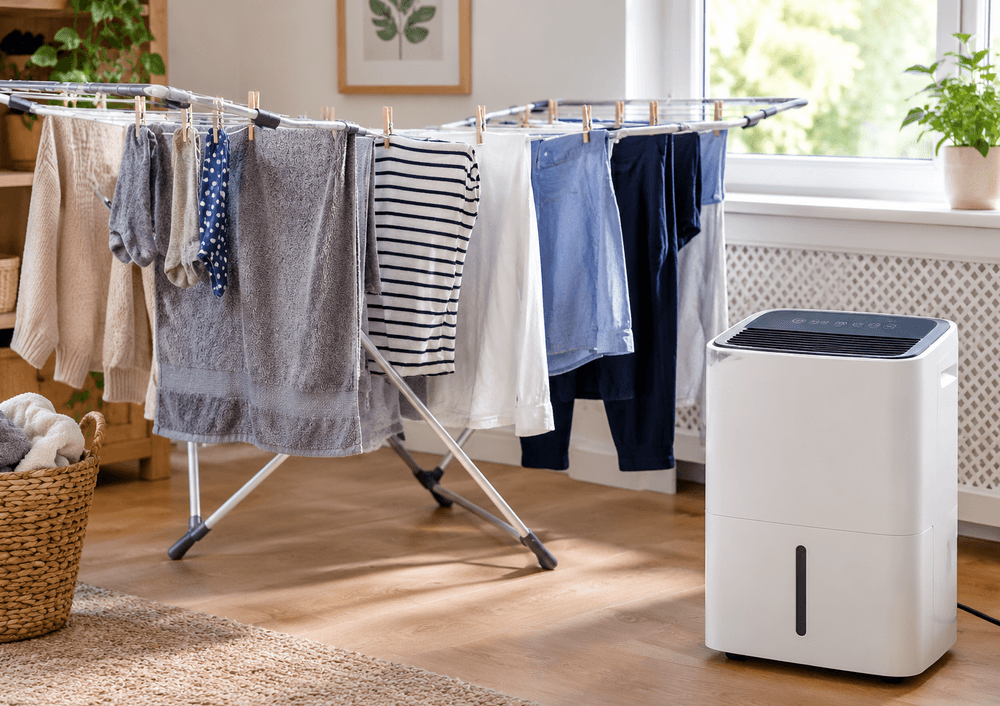
For households that regularly need to dry clothes indoors, a dehumidifier can be useful. A dehumidifier works by removing moisture from the air, helping to reduce humidity while laundry dries. Some models have specific laundry or drying modes designed to speed up the process. Place the appliance according to the manufacturer’s instructions and keep doors and windows positioned appropriately for the particular model and room. A dehumidifier can be a practical addition but is not a substitute for good ventilation on laundry day or fixing a genuine damp problem.
Do Not Dry Too Much Washing at Once
During winter, it can be tempting to wash several loads and put everything on an airer at once. A heavily loaded clothes airer can release a considerable amount of moisture into one room. If possible, spread washing throughout the day or allow one load to dry before starting another. This can make managing humidity much easier.
Keep Internal Doors Closed When Necessary
If you place your washing in one designated room, keeping the door closed can help prevent moisture from spreading throughout the property. This works best when the room itself has suitable ventilation. For example, closing the door while leaving a window slightly open or using an appropriate extractor can help direct humid air outside rather than allowing it to travel into colder parts of the house. Avoid simply shutting wet washing into a completely unventilated room.
Give Your Home Regular Airflow
During autumn and winter, it is understandable to want to keep every window closed to retain heat. However, completely sealing up your home can allow everyday moisture from cooking, showering, drying clothes and even breathing to accumulate. Short periods of ventilation can help refresh stale, humid air. Remember that moisture is produced throughout the home, not just from damp clothes. Cooking with lids on pans, using kitchen extraction, keeping bathroom doors closed during showers and ventilating bathrooms afterwards can all help reduce overall humidity.
Should You Dry Clothes Indoors With the Heating On?
There is nothing inherently wrong with drying clothes indoors while the heating is operating, but the key issue is what happens to the moisture released by the laundry. A warm room can help clothes dry more quickly, but if humid air remains trapped inside, condensation can still occur. Rather than simply increasing the heating, focus on a combination of:
Warmth + Airflow + Ventilation
Combining warmth, airflow and ventilation can help clothes dry more efficiently while reducing the risk of condensation forming on cold surfaces.
Rather than turning up the heating simply to dry your washing, focus on balancing warmth, airflow and ventilation. There are also plenty of other simple ways to make your home more efficient, as we explain in our guide to additional energy saving tips in the home.
How to Prevent Mould Indoors
Preventing mould is largely about controlling moisture and improving airflow. If indoor washing is contributing to condensation, start by looking at the whole room rather than simply treating visible mould. Make sure furniture is not pushed tightly against cold external walls, maintain ventilation and avoid allowing rooms to become persistently damp. If mould does appear, deal with it promptly and follow appropriate cleaning guidance. If it keeps returning despite reasonable efforts to control moisture, there may be an underlying issue such as inadequate ventilation, a leak, penetrating damp or another building-related problem. For significant or persistent damp and mould, professional advice may be appropriate.
For further advice on managing moisture and mould, the UK Government provides guidance on understanding damp and mould, including the importance of identifying and addressing underlying causes.
Conclusion
Drying clothes indoors is often unavoidable during the colder months, particularly for busy households without access to a tumble dryer or suitable outdoor space. The key is to control the moisture rather than simply trying to speed up the process as quickly as possible throughout the autumn and winter months.


