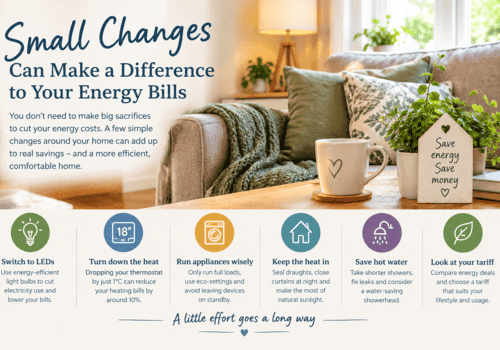
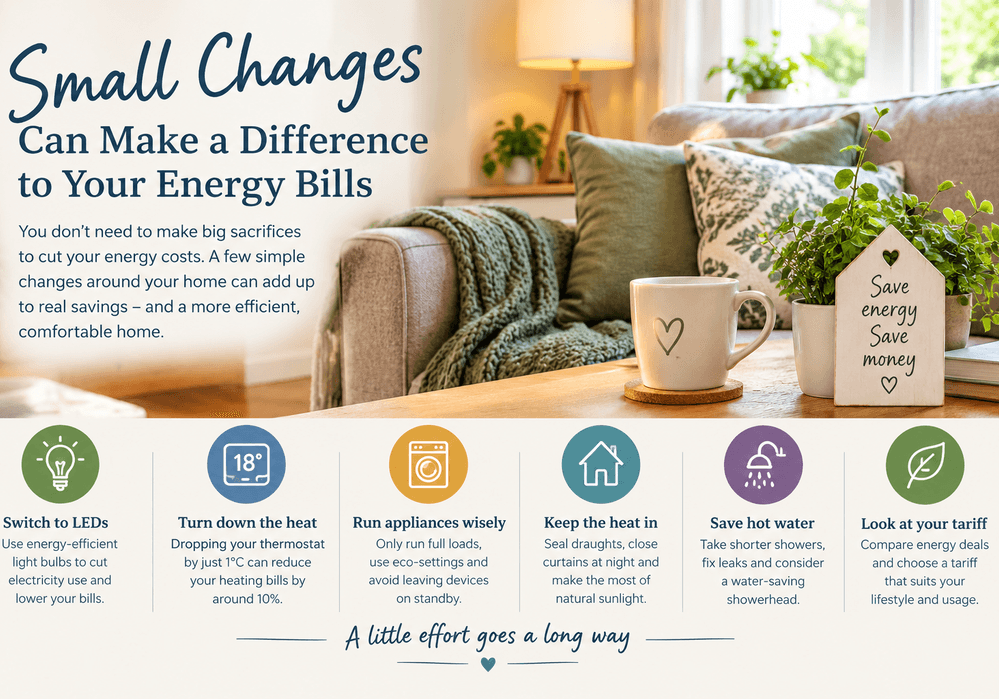
Small Changes That Can Make a Difference to Your Energy Bills
Table of Contents
With energy bills continuing to put pressure on household budgets, finding practical ways to reduce energy use at home can make a welcome difference. The good news is that you don’t necessarily need expensive renovations or new appliances to start saving money.
From stopping draughts and making better use of your heating to changing a few everyday laundry habits, there are plenty of small adjustments worth considering. Here are some simple ways to reduce your energy bills, improve comfort and make your home more energy-efficient this winter.
Stop Heat Escaping Through Doors and Windows
Even small gaps around windows, doors and skirting boards can allow warm air to escape and cold draughts to enter your home. Over time, this can make rooms feel colder and increase the amount of heating needed to keep them comfortable.
Fortunately, draught-proofing is one of the simplest and most affordable ways to improve your home’s energy efficiency. The Energy Saving Trust also recommends draught-proofing as a practical way to reduce heat loss and make your home more comfortable.
Start by checking for gaps around window frames, external doors, letterboxes and skirting boards. Depending on where the draught is coming from, you could:
- Fit self-adhesive draught-proofing strips around doors and windows.
- Use a draught excluder along the bottom of external doors.
- Seal small gaps around skirting boards and window frames with suitable flexible sealant.
- Fit a letterbox brush or cover to reduce cold air entering through the front door.
- Close curtains when it gets dark to help reduce heat loss through windows.
These small improvements can make your home feel warmer without immediately reaching for the thermostat.
Important: Avoid blocking air bricks, trickle vents or other ventilation openings designed to maintain airflow. Good ventilation is essential for managing moisture and reducing condensation and mould.
Use Your Heating Controls More Efficiently
Heating your home when nobody needs the warmth can waste energy and increase your bills. Making better use of your thermostat, programmer and radiator controls can help you maintain a comfortable temperature without using more energy than necessary. Understanding the best boiler settings for efficiency can also help you make more informed decisions about how you heat your home.
If you have a gas central heating system, consider setting your heating to come on shortly before you get up in the morning and before you return home, rather than automatically heating an empty house throughout the day.
The Energy Saving Trust generally recommends setting your room thermostat to the lowest comfortable temperature, typically between 18°C and 21°C for most households. Some people, including older adults and those with certain health conditions, may need warmer conditions.
Make Use of Thermostatic Radiator Valves
Thermostatic radiator valves (TRVs) allow you to adjust the temperature in individual rooms. For example, you might prefer a warmer living room in the evening while keeping an unused spare bedroom at a lower temperature.
However, avoid turning heating off completely in rooms prone to damp or condensation, particularly during colder weather.
Consider Smart Heating Controls
Smart thermostats and programmable heating controls can make managing your heating easier. Some allow you to create schedules, adjust temperatures remotely and monitor heating patterns.
If you have a heat pump, check the manufacturer’s guidance before making significant changes to your heating schedule. Heat pumps often operate most efficiently when maintaining relatively steady temperatures.
The aim isn’t to leave your home feeling cold, but to use your heating more thoughtfully and avoid wasting energy unnecessarily.
Bleed Your Radiators to Improve Heating Efficiency
If your radiators feel cold at the top but warm at the bottom, trapped air could be preventing hot water from circulating properly. This can make your heating system less effective and leave some rooms feeling colder than others.
Bleeding your radiators releases trapped air, helping them heat more evenly. Although this won’t necessarily lead to a noticeable reduction in your energy bills, it can improve comfort and help your heating system work as intended.
How to Tell if Your Radiators Need Bleeding
Common signs include:
- Radiators that are cold at the top but warm at the bottom.
- Gurgling or bubbling noises coming from your radiators.
- Rooms taking longer than usual to warm up.
If you notice these signs, bleeding your radiators may help.
Before starting, switch off your central heating and allow the radiators to cool. Use a radiator key and a cloth to carefully release trapped air, closing the valve as soon as water begins to appear.
If you have a sealed central heating system, check the boiler pressure afterwards and follow the manufacturer’s instructions if it needs adjusting.
Remember: If a radiator remains cold at the bottom, the problem could be sludge rather than trapped air. Persistent cold spots or heating problems may require attention from a qualified heating engineer.
Install Radiator Reflectors to Reduce Heat Loss
Radiator reflector panels are an inexpensive way to help reduce heat loss, particularly in older homes where radiators are fitted to poorly insulated external walls.
These thin, reflective panels sit behind your radiators and help reduce the amount of heat transferred into the wall, allowing more warmth to remain inside the room.
They’re generally inexpensive, relatively easy to install and can be cut to fit behind different radiator sizes.
Are Radiator Reflectors Worth Installing?
Radiator reflectors are most likely to be beneficial when:
- Your radiators are positioned against external walls.
- Your home has solid walls or limited wall insulation.
- You’re looking for affordable improvements without major building work.
If your home already has well-insulated cavity walls, the potential savings may be relatively small.
For the best results, choose purpose-made radiator reflector panels and follow the manufacturer’s installation instructions.
Although radiator reflectors won’t transform your energy bills overnight, they can be a worthwhile addition to other simple energy-saving improvements around your home.
Use Thermal Curtains to Keep Your Home Warmer
Windows can be a significant source of heat loss during colder months, particularly in older properties with single glazing or poorly insulated window frames. Choosing the right curtains can help make rooms feel warmer and more comfortable without compromising on style.
Thermal curtains have an insulating lining designed to reduce heat transfer through windows. If you already have curtains you love, adding a thermal lining can be a more affordable alternative to replacing them completely.
Simple Ways to Make Your Curtains More Energy-Efficient
- Choose thermal-lined curtains: These can help reduce heat loss through windows, especially during colder evenings.
- Make sure curtains fit properly: Floor-length curtains that extend beyond the window frame can help limit cold air circulating into the room.
- Close curtains at dusk: Drawing your curtains when daylight fades helps retain warmth overnight.
- Let natural sunlight in: Open curtains during sunny winter days to take advantage of free warmth from the sun.
- Consider layering: Combining lightweight voile curtains with heavier curtains provides privacy during the day and additional insulation at night.
For the best results, avoid allowing long curtains to hang directly over radiators, as this can trap heat behind the fabric rather than allowing it to circulate around the room.
Thermal curtains won’t replace proper insulation or double glazing, but they can be a practical and stylish way to improve comfort during winter.
Use ECO Settings on Your Household Appliances
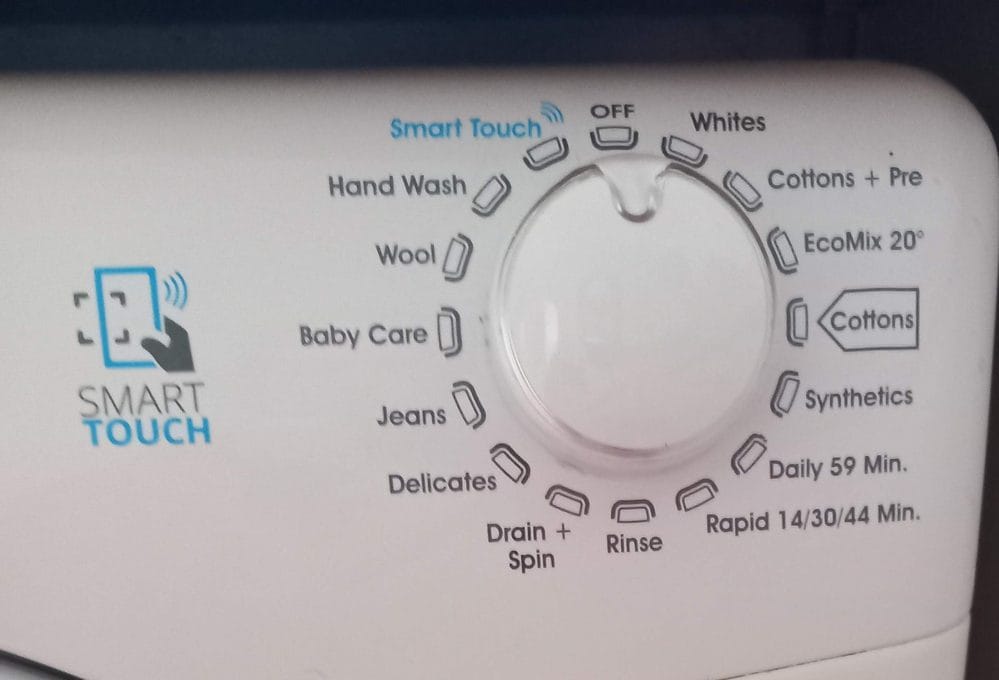
Many modern household appliances have an ECO setting designed to reduce energy consumption while still delivering effective results. Choosing these programmes where appropriate can be a simple way to lower your household’s electricity and water usage.
For example, ECO programmes on dishwashers and washing machines often use lower temperatures and longer cycles to achieve good cleaning results while consuming less energy.
Although an ECO cycle may take longer than a standard programme, this doesn’t necessarily mean it uses more electricity. Much of the energy consumed by washing machines and dishwashers goes towards heating water, so operating at lower temperatures can make a difference.
Easy Ways to Save Energy When Using Appliances
- Dishwashers: Use the ECO programme when suitable and wait until you have a full load before running it.
- Washing machines: Choose a 30°C wash for everyday laundry when appropriate, following clothing care labels and detergent instructions.
- Tumble dryers: Use sensor-drying programmes where available to avoid running the machine longer than necessary.
- Fridges and freezers: Check that temperatures are set correctly. The Food Standards Agency recommends keeping your fridge at 5°C or below, while freezers are generally recommended to operate at around -18°C.
- Kettles: Only boil the amount of water you need, while respecting the appliance’s minimum fill level.
Small changes to the way you use everyday appliances can add up over time, particularly in busy households where washing machines and dishwashers are used frequently.
Before changing settings, check your appliance’s instruction manual to understand which programmes are most suitable for your needs.
Keep Your Tumble Dryer Clean and Running Efficiently
Tumble dryers can be among the more energy-hungry appliances in the home, particularly during autumn and winter when drying clothes outdoors becomes difficult.
Keeping your tumble dryer clean and properly maintained can help it operate efficiently, reduce unnecessary drying time and lower the risk of overheating.
Lint, fluff and dust can build up in filters and other components over time, restricting airflow and affecting drying performance.
Simple Tumble Dryer Maintenance Tips
- Clean the lint filter: Remove fluff after every drying cycle, following the manufacturer’s instructions.
- Check the condenser or heat exchanger: If your tumble dryer has one, clean it as recommended in the appliance manual.
- Avoid overloading: Overfilling the drum can prevent clothes from tumbling freely and drying evenly.
- Use sensor drying: If your machine has moisture sensors, these can help stop the cycle when clothes are dry rather than running for a fixed period.
- Check ventilation: If you have a vented tumble dryer, ensure the external vent and hose remain clear and unobstructed.
- Consider dryer balls: These may help separate laundry and improve airflow, although energy savings aren’t guaranteed.
Always follow the manufacturer’s maintenance guidance, and never leave a tumble dryer running while you’re asleep or away from home.
Consider Alternatives to Tumble Drying
When possible, drying clothes naturally can help reduce electricity consumption. During winter, however, it’s important to manage indoor moisture levels to prevent condensation and mould.
Our guide to how to dry clothes indoors explores practical ways to dry laundry at home while managing moisture and keeping rooms comfortable.
By combining sensible laundry habits with regular appliance maintenance, you can help keep your tumble dryer working effectively without using more energy than necessary.
Switch to LED Lighting and Reduce Standby Energy Use
Lighting and electronic devices contribute to household electricity consumption, but a few simple changes can help reduce the amount of energy you use each day.
Replace Older Light Bulbs with LEDs
LED bulbs use considerably less electricity than traditional incandescent or halogen bulbs and generally last much longer, making them a practical choice for reducing lighting costs.
You don’t need to replace every bulb in your home at once. Start with the lights you use most frequently, such as those in your kitchen, living room and hallway.
When choosing LED bulbs, check the brightness in lumens rather than relying solely on wattage. Warm white bulbs can create a cosy atmosphere in living areas, while brighter lighting may be more suitable for kitchens and workspaces.
Switch Off Appliances Rather Than Leaving Them on Standby
Many electrical devices continue to consume small amounts of electricity when left on standby. Although individual appliances may use very little power, the combined consumption can add up over time.
Consider switching off televisions, games consoles, computer monitors and other suitable devices at the wall when they’re not being used.
Smart plugs and switched extension leads can make this easier, particularly where several devices are connected in one area.
However, some appliances need a continuous power supply. Avoid switching off essential equipment such as fridges, freezers, medical devices or anything that requires electricity for safety or normal operation.
You should also check manufacturer guidance before routinely disconnecting devices such as broadband routers, smart home hubs or appliances that need to complete maintenance cycles.
These changes may seem small, but they can help reduce unnecessary electricity consumption without affecting your everyday comfort.
Check Whether Off-Peak Electricity Could Save You Money
Changing when you use electricity could help reduce your energy bills, but only if your electricity tariff offers different rates depending on the time of day.
Many UK households are on a standard single-rate electricity tariff, meaning they pay the same unit rate regardless of whether they use electricity in the morning, afternoon or evening.
However, some households have time-of-use tariffs, such as Economy 7 or certain smart electricity tariffs, which offer cheaper electricity during specific hours.
Could You Benefit from Off-Peak Electricity?
If you’re on a tariff with cheaper off-peak rates, you may be able to save money by shifting suitable activities to lower-cost periods.
For example, you could:
- Run your dishwasher during cheaper electricity periods, provided you’re at home and awake.
- Use your washing machine when your tariff offers a lower rate.
- Charge an electric vehicle during designated off-peak hours.
- Make use of programmable heating or hot water controls where appropriate for your system and tariff.
Always check the exact off-peak hours with your energy supplier, as these vary between tariffs.
For safety, avoid running washing machines, tumble dryers and dishwashers overnight while you’re asleep or when nobody is at home.
Check for Energy-Saving Incentives
Some energy suppliers also offer schemes that reward customers for reducing electricity use during periods of high demand.
These schemes may be available to eligible households with smart meters, although availability and rewards vary.
Before changing your routine or switching tariffs, compare your current electricity rates, standing charges and household usage patterns to make sure the potential savings are worthwhile.
The most effective approach is to understand how you’re charged for electricity and make small adjustments that suit your household.
Small Changes Can Make a Difference to Your Energy Bills
Reducing your household energy bills doesn’t always require expensive upgrades or major changes to your lifestyle. Often, it’s the small, consistent habits that can make a difference over time.
From draught-proofing windows and making better use of your heating controls to choosing ECO appliance settings and switching to LED lighting, there are plenty of practical ways to reduce unnecessary energy consumption.
Start with the changes that are easiest and most affordable for your household. Even if individual savings are modest, combining several improvements can help make your home more energy-efficient and comfortable throughout the year.
Which energy-saving changes have made the biggest difference in your home? We’d love to hear your tips and experiences in the comments below.